Why Couples Skip the Pro Photographer
Cost breakdown: what a wedding photographer actually charges
Wedding photography is one of the largest single expenses in most wedding budgets. The Knot's wedding photographer cost guide breaks down what couples pay across the country — full-service photographers routinely charge several thousand dollars, with rates in major cities running considerably higher. That price reflects more than hours at the venue: editing, backup equipment, liability insurance, and post-processing time all factor in.
When a professional truly is optional
A dedicated professional is genuinely optional in certain situations:
- Micro-weddings and elopements with a small guest count, where coverage is simpler and the atmosphere is relaxed.
- Backyard or casual celebrations where a polished gallery isn't a priority.
- Couples who want video over photos and are comfortable treating stills as secondary.
This is a decision framework, not a value judgment. Some couples prioritize experience over documentation. If that describes you, the five options below give you a real, actionable plan.
Option 1 — Hire a Student or Associate Photographer
Where to find emerging photographers
Student and early-career photographers need real-event portfolio work. Many will shoot at reduced rates — or even for credit. Three reliable places to look:
- Photography school programs: Many art schools and community colleges maintain referral lists of student photographers seeking event experience. Contact the program coordinator directly.
- Thumbtack and Bark: Both platforms list photographers across a range of price points. Filter by experience level and read reviews before reaching out.
- Local Facebook groups: Wedding-specific local groups often have emerging photographers posting portfolios and taking enquiries directly.
What to ask before booking
Always request a full gallery from a real past event — not a highlights reel. Curated portfolios hide weak shots. You want to see how they handle indoor reception lighting, fast-moving moments, and group formals.
Before you book, get these details in writing:
- Number of edited images delivered
- Editing turnaround time
- Raw file rights and terms
- Backup plan if they fall ill or experience equipment failure the day of
Realistic expectations on editing turnaround
Student photographers often take longer to edit than experienced pros. Four to eight weeks is a common range in the industry. If you have a hard deadline — like needing images for a family gathering six weeks after the wedding — put an exact delivery date in the contract.
One real limitation: student photographers can produce excellent candids in good light, but many struggle with low-light reception conditions. Ask specifically about this and request sample shots from late-evening events before committing.
Option 2 — Use a Photo-Sharing App to Crowdsource Guest Photos
How collective guest photography works
Guests at a typical wedding collectively take hundreds — sometimes thousands — of photos across different angles, moments, and parts of the venue. The challenge is collecting them in one place without asking anyone to share personal phone numbers or join yet another WhatsApp group.
A dedicated event photo-sharing app solves this.
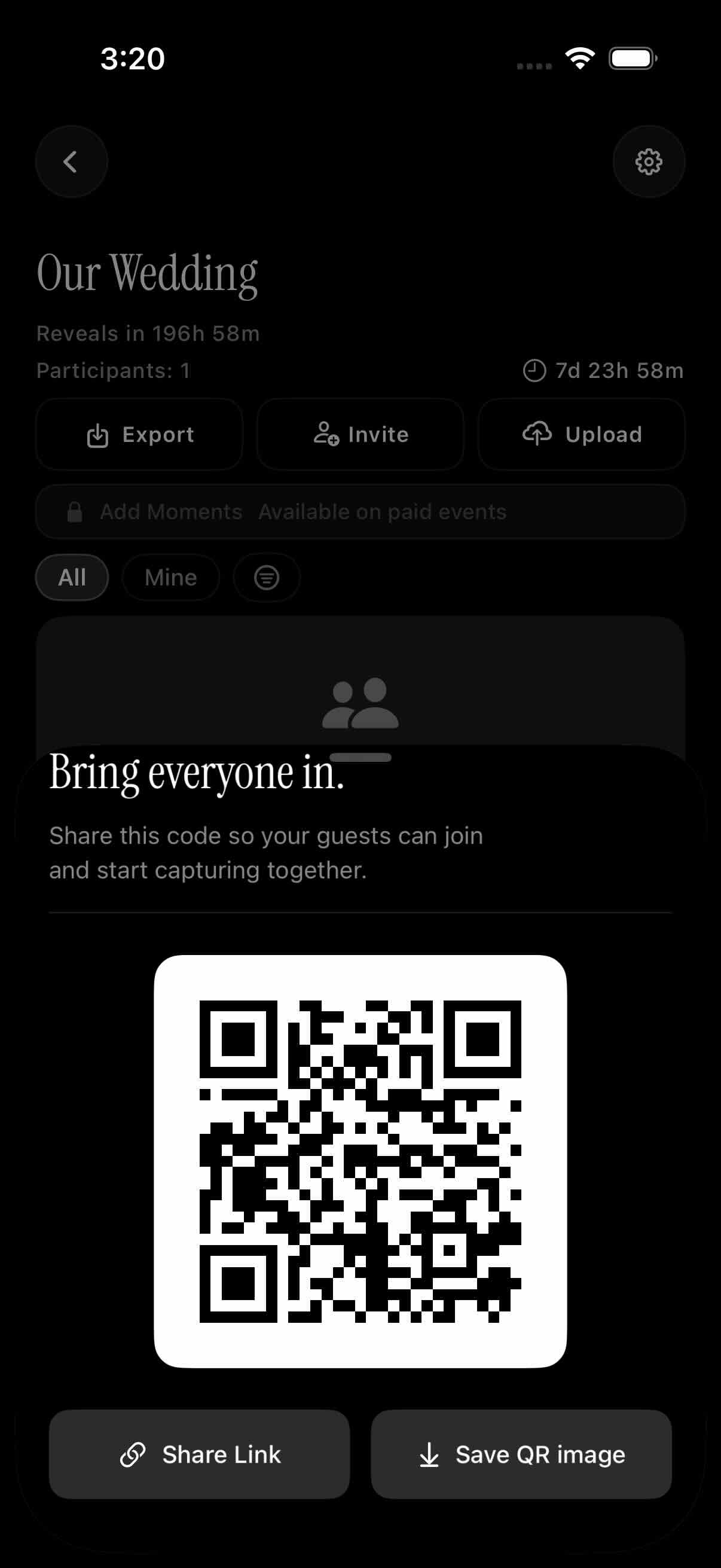 One QR code at the venue gives every guest instant access to the shared event — no app install required on their end.
Setting up an event so every guest can contribute
Sync lets couples create a private event, generate a QR code, and collect photos from all guests in a single gallery. Guests don't need to install an app — they scan the code and contribute directly from their phone's browser.
A few features that matter specifically for weddings:
- Gallery reveal control: photos stay hidden until you unlock the gallery, so nothing surfaces before the ceremony ends.
- Filter-by-photographer view: browse photos from each individual contributor without scrolling the entire gallery. Useful when you want to find the best shots from a specific guest. Learn more in the wedding guest photo sharing guide.
- Free tier: supports up to 7 guests at no cost. The paid tier removes that limit and is suited to larger weddings with unlimited uploads.
Organizing the gallery after the event
After the wedding, the filter-by-photographer view lets you scan each contributor's photos quickly. Download the ones you want and build your album from everything collected. See how to create a wedding photo album from a mixed-source gallery for step-by-step guidance.
This option pairs well with every other approach in this guide. A student photographer plus a guest sharing app gives you near-complete coverage of your day.
Option 3 — Rent a Photo Booth or Instant Camera Station
Rental photo booths vs. DIY setups
Photo booth rentals add an interactive element to the reception. WeddingWire's photo booth rental cost guide covers current pricing by location and package — rates vary significantly by region and features, so check there for up-to-date numbers. Mid-range digital booths typically include a prop kit, an attendant, and a sharing feature that emails or texts photos to guests instantly after each session.
DIY alternative: buy or borrow several instant cameras — Fujifilm Instax models are widely available new and used — and place them on reception tables. Guests take photos throughout the night and leave the cameras on the table at the end.
Instant cameras as a guest-activity alternative
Instant cameras have one real advantage: guests leave with a physical print. That's a tangible memento they actually keep. The tradeoff is ongoing film cost — Fujifilm Instax film packs add a per-shot expense, so factor this into your budget when planning.
The main limitation of both booths and instant cameras: they capture posed, fun reception moments. They won't cover your ceremony or candid moments elsewhere in the venue. Use either as a supplement to another option, not a standalone solution.
Option 4 — Hire a Videographer Instead and Extract Stills
When video-first makes sense
Some couples want a moving record of their day more than a photo album. If that describes you, hiring a videographer and skipping a dedicated photographer is a legitimate choice.
Modern videographers often shoot in 4K or 6K. At those resolutions, a frame extracted from the footage can be sharp enough to share digitally and print at moderate sizes.
How to extract high-quality stills from wedding footage
Not all videographers offer still extraction as a service. Negotiate it into the contract before you book, and ask to see examples of extracted stills from past events before committing.
A few honest caveats:
- Extracted stills work best for slower ceremony moments where the camera holds steady.
- Fast-moving moments — first dances, bouquet tosses — often produce motion blur in extracted frames.
- This option covers ceremony documentation well but won't replace candid portraits throughout the day without a separate shooter.
Videographers often charge rates comparable to photographers. The financial saving isn't always significant. What you gain is a richer storytelling format and a complete moving record of the day — a different trade, not necessarily a cheaper one.
Option 5 — Ask a Talented Friend or Family Member
How to set a friend photographer up for success
A friend with a good eye and a decent camera can produce real results — but only if you set them up properly. Leaving it casual almost always leads to disappointment.
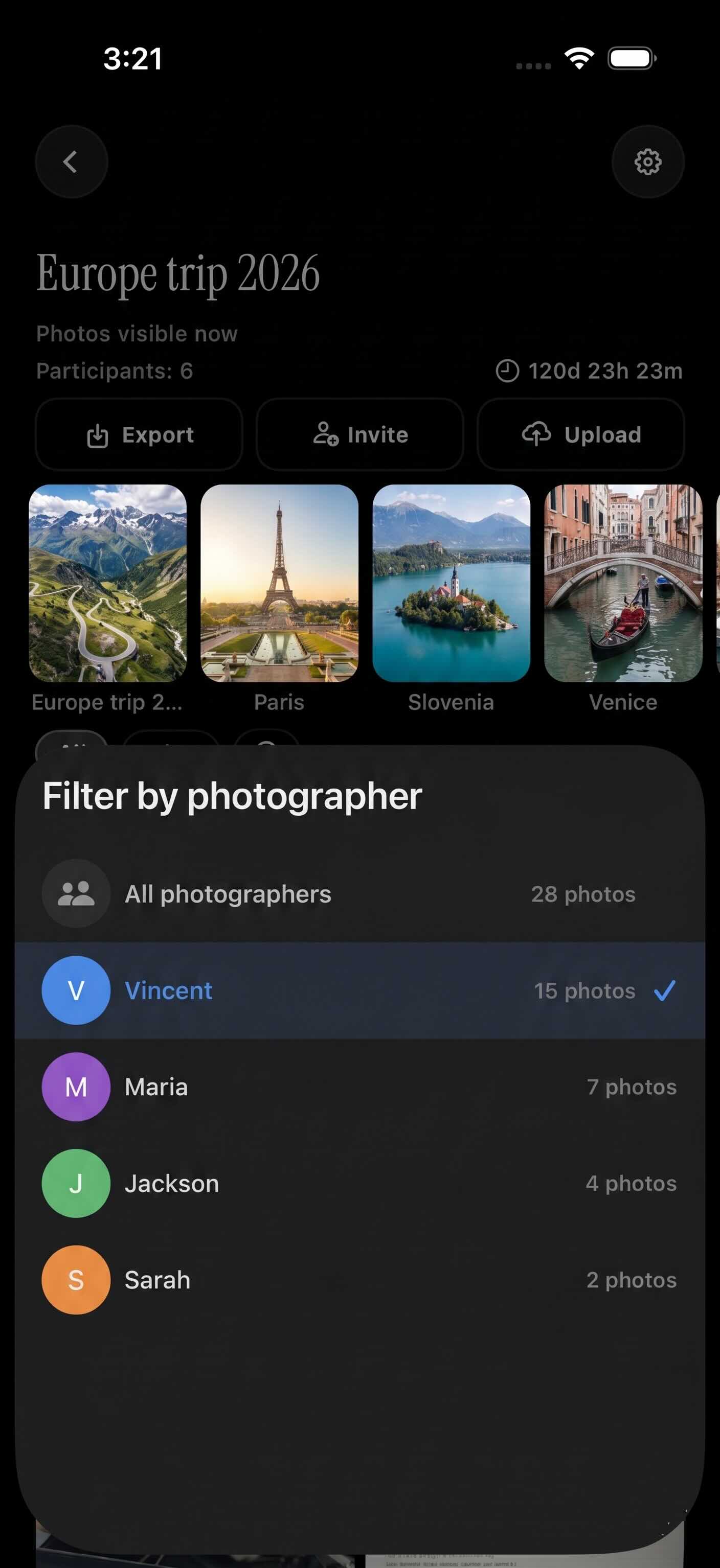 The filter-by-photographer view lets you isolate your designated friend's shots from the broader guest gallery and review their full coverage in one place.
Before the wedding:
- Lend or rent a camera with a fast prime lens. A 50mm f/1.8 is affordable — often available used for well under $200 — and handles low-light conditions far better than a kit zoom.
- Brief them on the venue layout and walk through the shot list together at least a week out.
- Confirm their commitment the day before the wedding, not the morning of.
Shot list and logistics tips
Give them a written list with must-have moments: first kiss, ring exchange, family formals, first dance, cake cutting. Rank the list. If they only nail the top five, those are the ones that matter most.
The biggest failure mode is predictable: the friend gets pulled into socializing. They're a guest too, and that pull is natural. Solve it in advance. Assign them a defined role with a clear start and end time. Pair them with a guest photo-sharing app so other guests supplement coverage from different angles and fill the gaps.
How to Get Full Coverage Without a Single Pro: A Hybrid Stack
Combining two or three alternatives for complete-day coverage
No single alternative delivers everything a full-service photographer does. Two or three combined gets you much closer. A practical hybrid stack for a mid-size wedding:
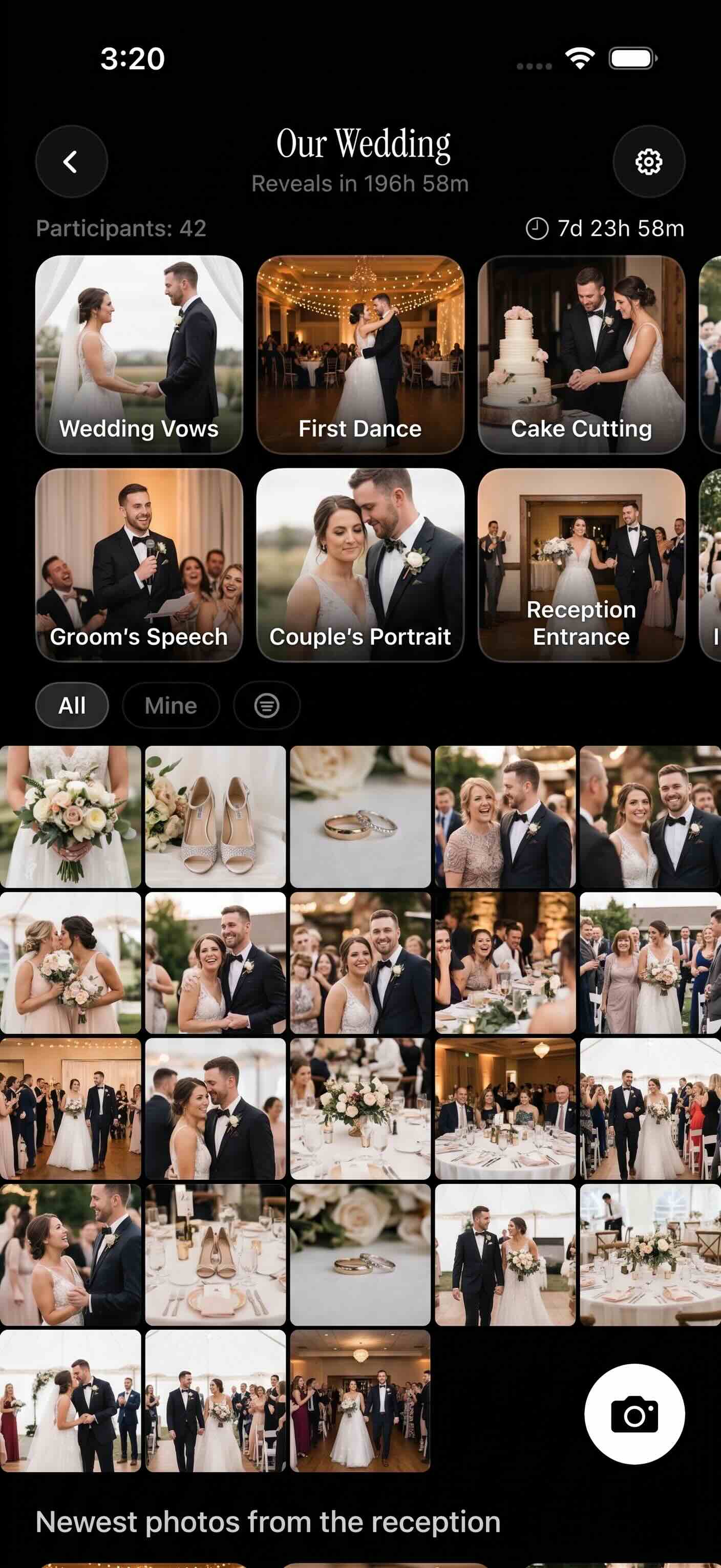 The result of a multi-contributor approach: a gallery with photos from every part of the venue and every phase of the day.
- Ceremony: a student photographer or committed friend with a shot list and a fast prime lens.
- Reception candids: a guest photo-sharing event with QR codes at each table and on entrance signage.
- Fun station: a photo booth or Fujifilm Instax cameras on the tables for posed group shots and a physical memento guests take home.
This combination covers ceremony moments with a dedicated shooter, reception candids with a distributed crowd of contributors, and playful moments with a booth — three coverage layers without a single full-service professional.
Timeline: what to arrange in the weeks before the wedding
- 4+ weeks out: Book the student photographer or confirm your friend's commitment. Reserve the photo booth rental if you're going that route.
- 2 weeks out: Create your Sync event. Test the QR code on multiple phones with different operating systems. Add the join link to your digital invitation or wedding website so guests already have it.
- 1 week out: Brief your designated photographer in person or on a call. Walk through the ranked shot list together. Confirm arrival time and the event schedule.
- Day of: Place QR code cards at every table. Put a sign at the venue entrance. Ask a family member to remind guests to scan and add their photos — one verbal prompt dramatically increases contribution rates.
The total cost of this hybrid approach depends on your specific choices. A student photographer at portfolio rates, a free or low-cost guest sharing plan, and DIY instant cameras together add up to a small fraction of what a full-service professional charges — a meaningful difference when you're working within a real budget.
Frequently Asked Questions
Can I really get good wedding photos without a professional?
Honestly, it depends. A well-organized hybrid plan — a dedicated shooter for ceremony coverage plus a guest sharing app for candids — can yield hundreds of natural, varied images that a single pro might miss from their fixed vantage point. What you give up is consistency and anticipation: a skilled photographer reads the room and positions before a moment happens. That is hard to replicate.
For micro-weddings and elopements, results with the hybrid approach can be genuinely excellent. For large, complex events across multiple locations, the planning burden rises sharply and the gaps in coverage become more visible.
What is the cheapest way to have wedding photos?
The lowest-cost option is a free shared photo album combined with a committed friend using a borrowed camera. If someone you know already owns a decent camera and lens and is willing to take on the role seriously, your cash outlay can be near zero. Sync's free tier supports up to 7 guests at no cost — enough for intimate gatherings.
Is a photo-sharing app safe for private wedding photos?
Apps like Sync use private, invite-only event links. Only guests who have the QR code can access the gallery — photos are not publicly indexed or searchable online. The gallery reveal control adds a second layer: nothing appears in the gallery until you unlock it, so you review before anything is visible. Your photos stay within the group you invite, and you control when they become visible to that group.